| Quick Links: |
|
|
| Summary |
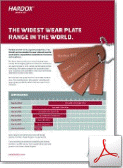
HARDOX:
state-of-the-art metallurgical
processes. A unique hardening
process and fanatical control of
specifications.
|
| |
 |
|
HARDOX - Selection & Properties |
| |
|
|
|
|
|
High Hardness Increases Wear Life
There is really no secret behind
HARDOX, it is better than any other
steel. Way better. Many times
better. Of course, it involves
state-of-the-art metallurgical
processes. A unique hardening
process and fanatical control of
specifications.
HARDOX wear plate has been developed
to withstand abrasive wear. The
actual wear life depends on the
material in contact with the plate
and the type of wear to which the
subjected.
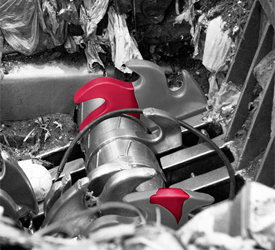
In the handling of materials, the
equipment is usually subjected to
stress of several types – sliding
and impact wear, also often combined
with heavy deformation. These
different wear conditions would
usually demand materials with
different compositions and different
properties. |
 |
|
|
|
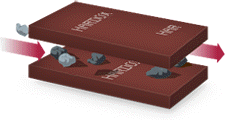
Different Types of Wear
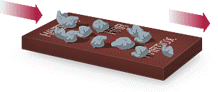
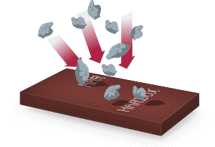
The most common wear types are sliding wear
and impact wear. Abrasive particles trapped
in a narrow gap between two rigid surfaces
causes squeezing wear, which is also a
common wear type. Each material is unique
and contributes differently to the specific
type of abrasive wear damage. |
|
|
 |
|
 |
|
 |
|
SLIDING |
|
IMPACT |
|
SQUEEZING |
|
|
|
In
sliding wear, abrasive material such
as rocks, gravel, concrete, scrap
metal or iron ore are free to slide
and roll with minimum effect on the
steel surface. The right HARDOX
grade will perform excellently and
provide extended service life. |
|
In
impact wear, the aggregate rocks hit
the surface of the wear component at
various angles. Choosing the right
HARDOX grade for the specific
abrasive material will improve
service life considerably. |
|
With
squeezing wear, the improvement in
service life of wear components is
more difficult to quantify. However,
it is easy to determine that HARDOX
plates will improve service life
compared to other steel qualities. |
|
|